Best Radio Streaming Services for Broadcasters
Best Radio Streaming Services for Broadcasters in 2026
The internet radio industry continues to grow, giving broadcasters more opportunities than ever to reach listeners worldwide. Whether you’re running a community station, a commercial radio network, a church broadcast, or a DJ stream, choosing the right radio streaming service can make a significant difference in reliability, listener experience, and long-term growth.
But with dozens of providers available, how do you know which one is right for your station?
In this guide, we’ll explore the most important features of modern radio streaming services and what broadcasters should look for when selecting a provider in 2026.
What Is a Radio Streaming Service?
A radio streaming service allows broadcasters to transmit audio content over the internet to listeners around the world.
Instead of relying on traditional FM or AM frequencies, internet radio stations use streaming servers that deliver audio directly to computers, smartphones, smart speakers, and connected devices.
Most streaming services provide:
- SHOUTcast or Icecast servers
- AutoDJ automation
- Listener statistics
- Web radio players
- SSL streaming
- Mobile compatibility
- Technical support
What Makes a Great Radio Streaming Service?
Not all providers offer the same level of performance.
The best radio streaming services typically focus on five key areas.
Reliability
Your station needs to be available 24/7.
Frequent downtime can quickly frustrate listeners and damage your reputation. Look for providers that offer enterprise-grade infrastructure and strong uptime guarantees.
Audio Quality
Modern listeners expect crystal-clear audio.
The best services support multiple bitrate options, allowing broadcasters to balance sound quality and bandwidth usage.
AutoDJ Functionality
AutoDJ keeps your station running even when you’re offline.
You can upload music, create playlists, schedule programs, and maintain continuous broadcasting without manual intervention.
Scalability
Your audience may start small but grow rapidly.
A quality streaming service should allow you to increase listener capacity without requiring complex migrations or server changes.
Technical Support
Even experienced broadcasters occasionally need assistance.
Fast and knowledgeable support can help resolve issues before they affect your audience.
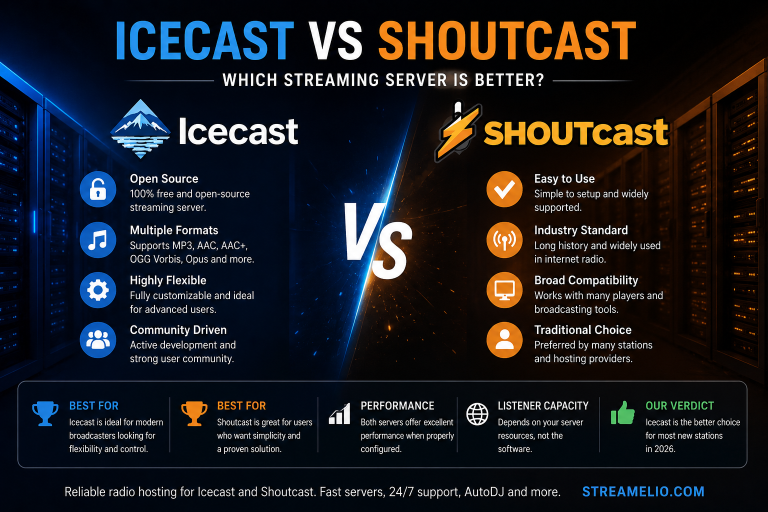
SHOUTcast vs Icecast
Most radio streaming providers support one or both of these technologies.
SHOUTcast
SHOUTcast remains one of the most widely used solutions in internet radio.
Advantages include:
- Broad compatibility
- Easy setup
- Large ecosystem
- Popular among broadcasters
Icecast
Icecast is an open-source alternative that offers excellent flexibility.
Advantages include:
- Open-source technology
- Multiple stream formats
- Strong community support
- Highly customizable configurations
For most broadcasters, either solution can work well, and many providers allow you to choose between them.
Features Every Broadcaster Should Look For
When comparing radio streaming services, make sure the following features are included.
SSL Streaming
Secure streaming is increasingly important for browser compatibility and listener trust.
Listener Statistics
Detailed analytics help you understand:
- Audience size
- Peak listening hours
- Geographic locations
- Listening devices
- Growth trends
Mobile Compatibility
A significant percentage of listeners now consume radio content on mobile devices.
Your provider should offer a seamless mobile listening experience.
Web Player Integration
A modern web player allows listeners to tune in directly from your website without downloading additional software.
Multiple Bitrates
Offering several bitrate options helps accommodate listeners with different internet connection speeds.
Who Needs Professional Radio Streaming?
Professional streaming services are ideal for:
Internet Radio Stations
Dedicated broadcasters need reliable infrastructure and advanced management tools.
DJs
Online DJs often require AutoDJ support, live broadcasting capabilities, and listener statistics.
Churches
Churches increasingly use internet radio and live audio streaming to reach members worldwide.
Educational Institutions
Schools and universities use streaming services for campus radio and educational broadcasts.
Community Organizations
Local communities can reach global audiences through affordable internet radio solutions.
Why Many Broadcasters Choose Managed Hosting
While self-hosting is possible, most broadcasters prefer managed radio streaming services.
Managed solutions remove the need to handle:
- Server maintenance
- Security updates
- Bandwidth management
- Software configuration
- Infrastructure monitoring
This allows broadcasters to focus on creating content rather than managing technology.
How Much Does Radio Streaming Cost?
Pricing varies depending on:
- Listener capacity
- Audio bitrate
- Storage requirements
- AutoDJ usage
- Additional features
Entry-level plans often start at only a few dollars per month, while professional solutions for larger audiences can cost significantly more.
For most broadcasters, starting with a scalable plan provides the best balance between cost and flexibility.
Final Thoughts
The best radio streaming service for broadcasters isn’t necessarily the cheapest option—it’s the one that provides the right balance of reliability, performance, scalability, and support.
Whether you’re launching your first online radio station or upgrading an established broadcast operation, investing in a quality streaming provider helps ensure a better experience for both broadcasters and listeners.
As internet radio continues to grow in 2026, choosing a dependable streaming service remains one of the most important decisions a broadcaster can make.